
(To see other currencies, click on price)
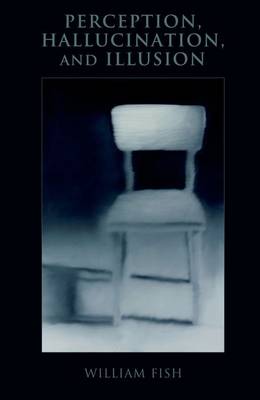
MORE ABOUT THIS BOOK
Main description:
The idea of a disjunctive theory of visual experiences first found expression in J.M. Hinton's pioneering 1973 book Experiences. In the first monograph in this exciting area since then, William Fish develops a comprehensive disjunctive theory, incorporating detailed accounts of the three core kinds of visual experience-perception, hallucination, and illusion-and an explanation of how perception and hallucination could be indiscriminable from one another
without having anything in common. In the veridical case, Fish contends that the perception of a particular state of affairs involves the subject's being acquainted with that state of affairs, and that it is the subject's standing in this acquaintance relation that makes the experience possess a phenomenal
character. Fish argues that when we hallucinate, we are having an experience that, while lacking phenomenal character, is mistakenly supposed by the subject to possess it. Fish then shows how this approach to visual experience is compatible with empirical research into the workings of the brain and concludes by extending this treatment to cover the many different types of illusion that we can be subject to.
Contents:
1 Naive Realism: The Theory and its Motivations ; 2 Naive Realism: Past and Future ; 3 Perception ; 4 Hallucination ; 5 Consciousness and the Brain ; 6 Illusion ; References ; Index
PRODUCT DETAILS
Publisher: Oxford University Press (Oxford University Press Inc)
Publication date: March, 2013
Pages: 208
Dimensions: 140.00 x 216.00 x 13.00
Weight: 280g
Availability: Available
Subcategories: Neuroscience