
(To see other currencies, click on price)
MORE ABOUT THIS BOOK
Main description:
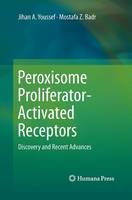
All three peroxisome proliferator-activated receptor (PPAR) subtypes share a high degree of structural homology while exhibiting differences in function, tissue distribution, and ligand specificity. In Peroxisome Proliferator-Activated Receptors: Discovery and Recent Advances, the authors trace the history of PPAR discovery and detail the receptor structure and its posttranslational modifications. Furthermore, endogenous ligands as well as various classes of exogenous ligands, subtype-selective, dual and pan agonists as well as antagonists, are discussed. In addition, the tissue distribution and versatile functions of PPAR subtypes in major organs are described.
As PPARs play critical roles as regulators of numerous physiological as well as pathophysiological pathways, Peroxisome Proliferator-Activated Receptors: Discovery and Recent Advances aims to help researchers to develop safer and more effective PPAR modulators as therapeutic agents to treat a myriad of diseases and conditions.
Contents:
I. Introduction
II. History of PPAR Discovery
A. Peroxisomes
B. Peroxisomal biogenesis and diseases
C. Peroxisome proliferation
III. Peroxisome Proliferator-Activated Receptors
A. Chromosomal location and gene polymorphism
i. PPARa
ii. PPARb/d
iii. PPARg
B. Protein structure
i. N-terminal end (A/B domain)
ii. DNA binding domain (DBD, C domain)
iii. Hinge region (D domain)
iv. Carboxyl terminal end (E/F domain)
IV. PPAR Ligands
A. Endogenous ligands
B. Exogenous PPAR modulators
V. Tissue Distribution and Versatile Functions of PPARs
A. Neurological functions of PPARsB. PPARs and the cardiovascular system
C. PPARs in pulmonary physiology and disease
D. Gastrointestinal roles of PPARs
E. PPAR functions in the liver
F. Roles of PPARs in the pancreas
G. PPARs in the urinary tract physiology and pathophysiology
H. PPARs in the reproductive system
I. Bone metabolism and PPARs
J. Roles of PPARs in skeletal muscle biology
K. Skin PPARs
VI. PPARs and Drug Metabolism
VII. Molecular Aspects of PPAR Actions
A. Posttranslational control of PPARs
B. Mechanism of action
VIII. Animal Models in PPAR Research
IX. Safety of PPAR Agonists
X. The Future of PPAR Research
XI. References
PRODUCT DETAILS
Publisher: Springer (Humana Press Inc.)
Publication date: May, 2015
Pages: 148
Weight: 454g
Availability: Available
Subcategories: Biochemistry