
(To see other currencies, click on price)
MORE ABOUT THIS BOOK
Main description:
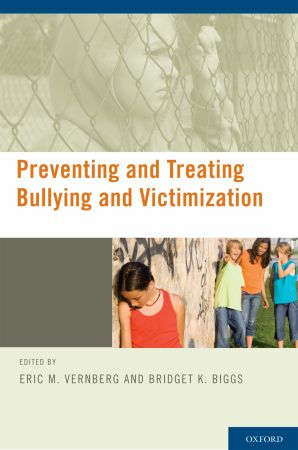
Research evidence on bully-victim problems has accumulated rapidly in recent years. From this, there is little doubt that prolonged involvement in bullying, as a perpetrator, victim, or, not uncommonly, as both a perpetrator and target of bullying, conveys risk for many aspects of development. As in many emerging areas of psychological science, diverse research efforts evolved more or less independently, producing a very large and rich body of knowledge, but making
it difficult to gain a comprehensive, integrated view of the overall evidence base. Preventing and Treating Bullying and Victimization looks across the sometimes disparate perspectives from school, clinical, and developmental researchers and professionals with an eye towards describing and integrating
current knowledge into a guide for evidence-based practices and further research. The authors offer new directions for understanding this complex problem and for enhancing intervention approaches.
This edited book will be comprised of three sections: Theoretical Perspectives, Assessment and Intervention, and Recommendations for Policy, Practice, and Research. It will be of interest to a number of professions and disciplines including clinical, developmental, counseling, and school psychologists, social workers, school administrators and educators, and public officials involved in setting policies.
Contents:
Part 1. Perspectives on Bullying
Chapter 1. Preventing and Treating Bullying and Victimization: An Evidence Based Approach. Eric M. Vernberg and Bridget K. Biggs
Chapter 2. A Contextual Perspective on Intervention and Prevention Efforts for Bully/Victim Problems. David Schwartz, Brynn M. Kelly, Mylien T. Duong, and Daryaneh Badaly
Chapter 3. A Child By Environment Framework for Planning Interventions with Children Involved in Bullying. Becky Kochenderfer-Ladd and Gary W. Ladd
Chapter 4. Family-Level Perspective on Bullies and Victims. Mary Elizabeth Curtner-Smith, Malvin Porter, and Peter K. Smith
Chapter 5. Psychopathology and Health Problems Affecting Involvement in Bullying. Allison G. Dempsey and Eric A. Storch
Part 2. Assessment and Intervention
Chapter 6. Methods for Assessing and Treating Bully-Victim Problems for Individual Children and Adolescents. Amie Grills-Taquechel, Rosanna Polifroni, and Heather T. Pane
Chapter 7. Methods for Assessing Bullying and Victimization in Schools and Other Settings:
Some Empirical Comparisons and Recommendations. Cary J. Roseth and Anthony D. Pellegrini
Chapter 8. Selected Group Interventions for Children who Exhibit Significant Involvement in Bullying. Kelly S. Flanagan and Kendra B. Battaglia
Chapter 9. What works in Bullying Prevention? Wendy M. Craig, Debra J. Pepler, Ashley Murphy, and Heather McCauig-Edge
Part 3. Strategies for Implementing Best Practices
Chapter 10. Empowering Schools to Prevent Bullying: A Holistic Approach. Anneliese A. Singh, Pamela Orpinas, and Arthur M. Horne
Chapter 11. Incorporating Bully-Victim Interventions into Clinic-based Mental Health Service. Fred Frankel
Chapter 12. Creating and Administering Successful Policy Strategies for School Anti-Bullying Programs. Stuart W. Twemlow and Frank C. Sacco
Chapter 13. Implementing Bullying Prevention in Diverse Settings: Geographic, Economic, and Cultural Influences. Nancy G. Guerra and Kirk R. Williams
Chapter 14. Preventing and Treating Bullying and Victimization: Best Practices and Future Directions. Bridget K. Biggs and Eric M. Vernberg
PRODUCT DETAILS
Publisher: Oxford University Press (Oxford University Press Inc)
Publication date: April, 2010
Pages: 424
Dimensions: 163.00 x 236.00 x 32.00
Weight: 731g
Availability: Available
Subcategories: Diseases and Disorders, Psychiatry, Psychology