
(To see other currencies, click on price)
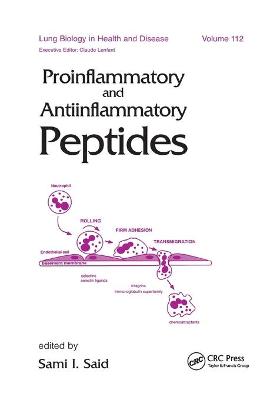
MORE ABOUT THIS BOOK
Main description:
"Analyzes the role of peptides in promoting or suppressing inflammation. Thoroughly examines the therapeutic potential of key peptides, analogs, agonists, and antagonists that influence cell injury and repair."
Contents:
Part 1 Cell injury and inflammation: inflammation, cell injury and apoptosis; proinflammatory and antiinflammatory response cytokines in the inflammatory response. Part 1 Proinflammatory peptides: proinflammatory peptides in sensory nerves of the airways; sensory neuropeptides and bronchial hyperresponsiveness; the tachykinin family of peptides and their receptors; endothelins in inflammation; endothelins in the lung; proinflammatory peptides in relation to other inflammatory mediators; cellular regulation of kinin receptors - potential roles in inflammation. Part 3 Antiinflammatory peptides: modulation of inflammatory effects of cytokines by the neuropeptide -MSH; regulation of VIP gene expression; neuroregulation of pulmonary immune responses by VIP and substance P; role of vasoactive intestinal peptide in myocardial ischaemia - reperfusion injury; antiinflammatory actions of VIP in the lungs and airways; VIP regulation of neuronal proliferation and differentiation; implications for neuronal repair; neurotrophic action of VIP - from CNS ontogeny to therapeutic strategy. Part 4 Modulation of peptide action - therapeutic applications: long-acting VIP analogs; catalytic anti-VIP antibodies and their relevance to the airways; enzymatic degradation of bradykinin; enzymatic modulation of the tachykinins and VIP in the lung; therapeutic effects and immunomodulatory activities of natriuretic peptides.
PRODUCT DETAILS
Publisher: Taylor & Francis (CRC Press)
Publication date: September, 2019
Pages: 760
Weight: 1133g
Availability: Available
Subcategories: Diseases and Disorders, Pharmacology, Respiratory Medicine