
(To see other currencies, click on price)
MORE ABOUT THIS BOOK
Main description:
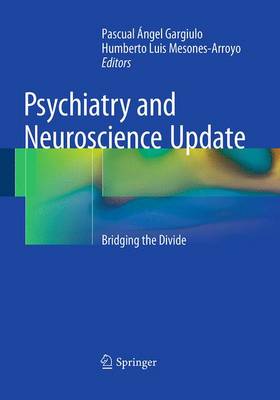
The intention of this unique title is to bridge the gap between psychiatry and neuroscience, allowing a fruitful dialogue between both sciences. Recognizing that psychiatry has received important contributions from the basic neurosciences and that the basic neurosciences have received inspiration and objectives from the open problems of psychiatry, Psychiatry and Neuroscience: Bridging the Divide is designed to identify the borders, trends and implications in both fields today. Comprehensive and developed by a renowned group of experts from both fields, the book is divided into four parts: Epistemological Considerations About the Study of Normal and Abnormal Human Behaviors; From Basic Neurosciences to Human Brain; Neurosciences, Learning, Teaching and the Role of Social Environment and Explaining Human Pathological Behaviors: From Brain Disorders to Psychopathology. A unique and invaluable addition to the literature in psychiatry and neuroscience, Psychiatry and Neuroscience: Bridging the Divide offers an important and clearer understanding of the relationship between psychiatry and neuroscience.
Contents:
PART 1: EPISTEMOLOGICAL CONSIDERATIONS ABOUT THE STUDY OF NORMAL AND ABNORMAL HUMAN BEHAVIORS
1. Knowledge, by Philosophy or Science? Psychotherapy or Neuroscience?
Humberto Luis Mesones-Arroyo
2. Phenomenology as an approach method in the Neurosciences
Ivana Anton Mlinar
3. Trends in Philosophy of Mind and in Philosophy of Neuroscience
Juan Jose Sanguineti
4. Neurosciences, Neuroeconomics, and Metaphysics
Ricardo F. Crespo, PhD
5. Towards a Psychotherapy with a Philosophical Basis
Ricardo Aranovich
6. DSM5: A Bioethical Overview
Gilberto A. Gamboa-Bernal
PART 2: FROM BASIC NEUROSCIENCES TO HUMAN BRAIN
7. Brain Renin-Angiotensin System: A Novel Therapeutic Target for Psychostimulant and Alcohol Related Disorders?
M. Constanza Paz, Natalia A. Marchese, Claudia Bregonzio, and Gustavo C. Baiardi
8. Role of the Neuropeptide Angiotensin II in Stress and Related Disorders
Claudia Bregonzio, Maria de los Angeles Marinzalda, and Gustavo Baiardi
9. Neurovascular Cognitive Alterations: Implication of Brain Renin-Angiotensin System (Ras). Therapeutic Opportunities and Risk Factors
Natalia Andrea Marchese, Brenda Solange Casarsa, Gustavo Baiardi, and Claudia Bregonzio
10. Prevention of Stress-Induced Cognitive Impairment: Today and Tomorrow
Emil Trofimiuk and Jan J. Braszko
11. Circadian Synchronization of Cognitive Functions
Ana Cecilia Anzulovich-Miranda
12. The Role of Iron and Other Trace Elements on Mental Development and Cognitive Function
Silvia Izquierdo Alvarez, Eloisa Urrechaga Igartua, Maria Teresa Llorente Ballesteros, and Jesus Fernando Escanero Marcen
13. New Insights in Glutamate-Mediated Mechanisms Underlying Benzodiazepines Dependence and Cocaine Vulnerability
Emilce Artur de la Villarmois, Laura A. Gabach and Mariela F. Perez
14. Soy and Psychotropic Effects: A Brief Overview
Rose E. Nina-Estrella
15. Use of Psychotropic Drugs: Between the Medicalization and Rationality
Alicia Panini, Marisa Garraza, Mauricio Teves, Emiliano Giraudo, Claudia Calderon
PART 3: NEUROSCIENCES, LEARNING, TEACHING AND THE ROLE OF SOCIAL ENVIRONMENT
16. Learning Styles: From Basic Investigation to Learning in the Classroom.Gabriela Diaz-Veliz
17. Learning Styles and Strategies: The Importance of the Tool Selection
Jesus Fernando Escanero Marcen, Marisol Soria Aznar, Manuel Guerra Sanchez, Jackson Silva and Pascual Angel Gargiulo
18. Attentional Capacity in Children: Intervention Programmes for its Development
Mirta Susana Ison
19. Social Representation and Imagery of Labor.
Evaluation Process of the Psychosocial and Labor Vulnerability (PSLV) and its Relation With Mental Health
Carlos Bonantini, Mauricio Cervigni, Melisa Mandolesi, Victor Quiroga, and Miguel Gallegos
PART 4: EXPLAINING HUMAN PATHOLOGICAL BEHAVIORS: FROM BRAIN DISORDERS TO PSYCHOPATHOLOGY
20. The Ying and Yang of Pain: Protective vs. Damaging
Cristian G. Acosta
21. Neuropsychological Disorders after Mild Traumatic Brain Injury or Concussion
G. Bermudez and .V. Lafuente
22. Animal Models of psychopathology and its relation to clinical practice
Amauri Gouveia and Thiago Marques de Brito
23. Biological Markers in Psychiatry and its Relation with Translational Approaches:
Brief Historical Review
Angel Jose Martin Gargiulo, Mercedes Maria Lucrecia Gargiulo, Augusto Pascual Italo Gargiulo, Gonzalo Mesones, Gustavo Martin, Adriana Ines Landa de Gargiulo, Humberto L. Mesones, and Pascual Angel Gargiulo
24. 'Two Hit' Neurodevelopmental Mechanisms In Schizophrenia: Focus On Animal Models And The Role Of BDNF
Maren Klug, Rachel Hill, and Maarten Van den Buuse
25. Translating the Glutamatergic Hypothesis of Schizophrenia through Homeostatic Regulation of Brain Glycine
Sylvain Dubroqua, Philipp Singer, Benjamin K. Yee
26. Adenosine in the neurobiology of schizophrenia: potential adenosine receptor-based pharmacotherapy
Francisco Ciruela, Victor Fernandez-Duenas, Fernando Contreras, Josep M. Arnau, Jose Manuel Menchon, Antoni Vallano, Marta Valle-Leon
27. Mindfulness and Neuroimaging
Nicolas Fayed, Ignacio Cifre, Javier Garcia-Campayo, and Laura Viguera
28. Clinical Magnetic Resonance Neuroimaging in Mild Cognitive Impairment and Alzheimers Disease
Nicolas Fayed, Javier Garcia-Campayo, and Laura Viguera
PRODUCT DETAILS
Publisher: Springer (Springer International Publishing AG)
Publication date: August, 2016
Pages: 434
Weight: 8641g
Availability: Available
Subcategories: Diseases and Disorders, Neurology, Neuroscience, Psychiatry