
(To see other currencies, click on price)
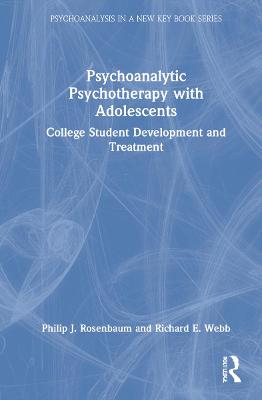
MORE ABOUT THIS BOOK
Main description:
In this book, Philip Rosenbaum and Richard Webb consider the complexities of working as counselors and psychotherapists for college students, and offer a broad and detailed account of the developmental issues essential to understanding adolescent experience.
Drawing on existentialism, cultural psychology and relational and object relations theories in psychoanalysis, this book offers a perspective that is sensitive to both clinical concerns and the broader context of college counseling and working with adolescents. Particular attention is paid to the emergence of adolescent identities through a relationship with "otherness," and several considerations are explored as a result. These include the emergence and reconciliation of destructive feelings, suicidal phenomenology and the effects of trauma.
By taking a fresh look at clinical developmental theories as they affect adolescents and young adults, Rosenbaum and Webb provide a view of college-student development that is theoretically rich and clinically applicable in a way that warrants renewed appreciation and practice among counselors, psychotherapists and psychoanalysts work with college-age clients.
Contents:
Introduction 1. Important Aspects of Our Existential Nature and Meaning-Making 2. Introduction to Four Existential-Relational Positions 3. Clinical Implications and Posture 4. Appreciating "Destructive" Processes in Adolescence 5. Developmental Considerations Associated with Suicide 6. Treating Trauma in the Fishbowl of University and College Counseling Centers 7. The Complexities of Otherness 8. A Macro-perspective on Groups and Group Identification Conclusion
PRODUCT DETAILS
Publisher: Taylor & Francis
Publication date: April, 2022
Pages: 192
Weight: 454g
Availability: Available
Subcategories: Psychotherapy