
(To see other currencies, click on price)
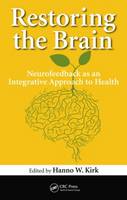
MORE ABOUT THIS BOOK
Main description:
Restoring the Brain: Neurofeedback as an Integrative Approach describes the history and process by which neurofeedback has become an effective tool for treating many mental and behavioral health conditions. It explains how new brain research and improvements in imaging technology allow for a new conceptualization of the brain. It also discusses how biomedical factors can degrade brain functioning and cause a wide range of symptoms of mental disorders.
The book is written in an accessible style for easy understanding and application to classification and treatment. It shares the clinical experiences of practitioners working with specific symptom constellations generally categorized by a DSM diagnostic label. It examines the brain as a self-regulating communications system and discusses how much of mental dysfunction can be understood as acquired brain behavior that can be redirected with the help of EEG-based neurofeedback. It describes principles and practices of integrating neurofeedback that make redirection possible.
Recent discoveries on the neuroelectrical properties of the brain illuminate the possibilities of combining innovative neurotherapy techniques with integrative medicine to achieve optimal brain function. Case studies of clinical applications highlight the effectiveness of neurofeedback in treating autism, ADHD, and trauma, particularly PTSD. Integrative approaches are the future of health care, and neurofeedback will play an increasingly significant role. Restoring the Brain: Neurofeedback as an Integrative Approach gives you a better understanding of the use and practice of neurofeedback.
Contents:
Changing the paradigm from neurochemical to neuroelectrical models
Hanno W. Kirk
History of neurofeedback
Siegfried Othmer
Astrocytes and infra-low frequencies
David A. Kaiser
The evolution of clinical neurofeedback practice
Meike Wiedemann
Neurofeedback in an integrative medical practice
Doreen E. McMahon
Nutrition and the brain
Nora T. Gedgaudas
Common biological factors that can impact brain function
Kurt N. Woeller
Applying neurofeedback to autism spectrum disorders
Kelley E. Foust
The use of neurofeedback for marines with combat stress (post-traumatic stress disorder)
Anna Benson and Tamsen W. Ladou
Post-traumatic stress disorder symptom reduction with neurofeedback
Monica G. Dahl
Neurofeedback in application to the ADHD spectrum
Roxana Sasu and Siegfried Othmer
PRODUCT DETAILS
Publisher: Taylor & Francis (CRC Press)
Publication date: August, 2015
Pages: 288
Weight: 1g
Availability: Not available (reason unspecified)
Subcategories: Psychiatry
CUSTOMER REVIEWS
"Restoring the Brain is an excellent synthesis of how the bioelectric model of human health resolves some of the existing knowledge gaps and difficult cases in health care today. The integrative approach of this collection of writings by neurofeedback research clinicians offers insight into areas that are difficult to resolve or reduce with the existing allopathic medical system of biochemical cocktails. The breakthroughs in bioelectric technology and its application to difficulties in modern living such as attention deficit, autism, pain management, post traumatic stress is a refreshing antidote to my prescription pad. This book is a much needed academic link between a scientific cutting edge technology, modern human health, and the spiritual premise of an indwelling spark of wisdom. …an eminently readable, exploration of topics for gaining greater knowledge about human health from the perspective of how the dynamics of brain functioning affect our daily functioning."
—Raymond McKnight, MD, President of the Monroe County Medical Association, Florida
"Restoring the Brain is a wonderful book willed with many scientific insights and useful clinical information. I highly recommend it."
—Daniel G. Amen, MD, Founder of Amen Clinics, author of Change Your Brain, Change Your Life
"…If you are interested in learning about this technique and the current state of science as applied to clinical problems, then this might be a book you should read."
—Michael Joel Schrift, DO, MA, Northwestern University Feinberg School of Medicine in Doody’s Book Reviews
"… contributors examine neurofeedback as a vital aspect of integrative medicine, and finally authors zero in on the applications of neurofeedback for developmental disorders, ASD, PTSD, and ADHD ... Buy this book, keep it with you, and be prepared to return to it again and again."
—Lorrie R. Fisher, LMFT, NBCFCH, Licensed Marriage and Family Therapist