
(To see other currencies, click on price)
MORE ABOUT THIS BOOK
Main description:
Recent years have seen the rise of a remarkable partnership between the social and computational sciences on the phenomena of emotions. Rallying around the term Affective Computing, this research can be seen as revival of the cognitive science revolution, albeit garbed in the cloak of affect, rather than cognition. Traditional cognitive science research, to the extent it considered emotion at all, cases it as at best a heuristic but more commonly a harmful bias to
cognition. More recent scholarship in the social sciences has upended this view.
Increasingly, emotions are viewed as a form of information processing that serves a functional role in human cognition and social interactions. Emotions shape social motives and communicate important information to social partners. When communicating face-to-face, people can rapidly detect nonverbal affective cues, make inferences about the other party's mental state, and respond in ways that co-construct an emotional trajectory between participants. Recent advances in biometrics and
artificial intelligence are allowing computer systems to engage in this nonverbal dance, on the one hand opening a wealth of possibilities for human-machine systems, and on the other, creating powerful new tools for behavioral science research.
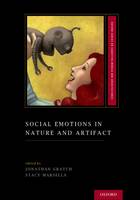
Social Emotions in Nature and Artifact reports on the state-of-the-art in both social science theory and computational methods, and illustrates how these two fields, together, can both facilitate practical computer/robotic applications and illuminate human social processes.
Contents:
Contributors ; Introduction ; Jonathan Gratch & Stacy Marsella ; 1 ; On the Sociality of Emotion-Eliciting Appraisals: Two Aspects ; Craig A. Smith & Leslie D. Kirby ; 2 ; Processes of Emotional Meaning and Response Coordination ; Brian Parkinson ; 3 ; Challenge, Threat and Social Influence in Digital Immersive Virtual Environments ; Jim Blascovich ; 4 ; Requirements for a process model of appraisal from a social functional perspective ; Stacy Marsella, Jonathan Gratch ; 5 ; Modeling Theory of Mind and Cognitive Appraisal with Decision-Theoretic Agents ; David V. Pynadath, Mei Si, & Stacy C. Marsella ; 6 ; Automatic Facial Expression Recognition ; Jacob Whitehill, Marian Stewart Bartlett, & Javier R. Movellan ; 7 ; Toward effective automatic recognition systems of emotion in speech ; Carlos Busso, Murtaza Bulut, & Shrikanth Narayanan ; 8 ; The Role of Context in Affective Behavior Understanding ; Louis-Philippe Morency ; 9 ; Computational Models of Expressive Behaviors for a Virtual Agent ; Rados?aw Niewiadomski, Sylwia Julia Hyniewska, & Catherine Pelachaud ; 10 ; Early Emotional Communication: Novel Approaches to Interaction ; Daniel S. Messinger, Mohammad H.Mahoor, Sy-Miin Chow, J. D. Haltigan, StevenCadavid, & Jeffrey F. Cohn ; 11 ; Using social agents to explore theories of rapport and emotional resonance ; Jonathan Gratch, Sin-Hwa Kang, & Ning Wang
PRODUCT DETAILS
Publisher: Oxford University Press (Oxford University Press Inc)
Publication date: January, 2014
Pages: 336
Dimensions: 178.00 x 260.00 x 22.00
Weight: 648g
Availability: Available
Subcategories: Neuroscience