
(To see other currencies, click on price)
MORE ABOUT THIS BOOK
Main description:
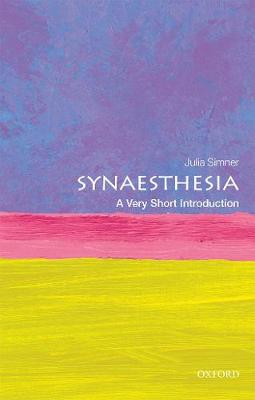
Can you taste words, feel flavours as a shape, or hear colors? If so you may well have synaesthesia, a neurological condition that gives rise to a 'merging of the senses'.
This Very Short Introduction describes synaesthesia's many forms, and delves into the underlying neuroscience. Explaining the scientific basis for synaesthesia, Julia Simner considers how we can measure the effects synaesthesia has on the everyday lives of people living with it. Exploring the fascinating stories of different synaesthetes' experiences of the world, she also discusses the documented links between synaesthesia, childhood development, memory, personality, and artistic
creativity, and the potential limitations synaesthesia might impose.
ABOUT THE SERIES: The Very Short Introductions series from Oxford University Press contains hundreds of titles in almost every subject area. These pocket-sized books are the perfect way to get ahead in a new subject quickly. Our expert authors combine facts, analysis, perspective, new ideas, and enthusiasm to make interesting and challenging topics highly readable.
Contents:
Preface
1: What is synaesthesia?
2: Synaesthesia in the brain
3: Synaesthesia and the arts
4: The ups and downs of synaesthesia: is it a 'gift' or a 'condition'?
5: Where does synaesthesia come from? The role of genetics and learning
6: The question of synaesthesia
Conclusion
Further reading
Index
PRODUCT DETAILS
Publisher: Oxford University Press
Publication date: June, 2019
Pages: 144
Dimensions: 111.00 x 173.00 x 9.00
Weight: 116g
Availability: Available
Subcategories: Neuroscience