
(To see other currencies, click on price)
MORE ABOUT THIS BOOK
Main description:
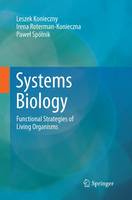
The objective of this book is to present the strategies employed by living organisms on a molecular level and to help understand the basics of Systems Biology. Its content is organized in a way to meet the exponential growth in the volume of biological knowledge, and the need for a multidisciplinary approach in the practice of teaching modern biology. For this reason, the whole material is divided into five chapters, each devoted to a fundamental concept: Structure-Function, Energy, Information, Regulation and Interrelationships. The book describes generic mechanisms which occur in biology and promotes a simulation-based approach to the subject of Systems Biology. The use of basic knowledge as the background for presenting biological problems obligates the teachers to deal with generalized phenomena comprising the ever increasing volume of teaching materials. This book is intended for biologists and is informative for specialists in the areas of computer science, robotics and engineering.
Contents:
Foreword
Introduction
1. THE STRUCTURE AND FUNCTION OF LIVING ORGANISMS
1.1 General physiochemical properties of biological structures
The biological purpose of cellular and organism structures
Supporting structures
Cellular supporting structures
Cellular shielding structures
Extracellular supporting structures
Polysaccharides as supporting structures
Structures associated with biological functions
Energy and information storage structures
1.2 Self-organization
1.3 Hypothesis - Protein folding simulation hypothesis - late stage intermediate - role of water
2. ENERGY IN BIOLOGY - Demand and Use
2.1 General principles of thermodynamics
2.2 Biological energy sources - synthesis of water
2.3 ATP synthesis
2.4 Photosynthesis
2.5 Direct and indirect exploitation of energy sources
Direct way (direct coupling of spontaneous and non-spontaneous processes to an energy source)
Indirect way (indirect coupling between non-spontaneous processes and sources of energy)
2.6 Energy conversion efficiency in biological processes
2.7 Entropic effects
2.8 Energy requirements of organisms
3. INFORMATION - Its Role and Meaning in Organisms
3.1 Information as a quantitative concept
3.2 Reliability of information sources
Steady-state genetics
Replication and its reliability
Gene expression and its fidelity
Development genetics (embryogenesis and regeneration) - the principles of cell differentiation - epigenetics
Molecular licensing of genes for transcription
Specificity of epigenetic processes
External control of cell proliferation and differentiation - embryonic development
The genetics of evolution
Combinatorial changes as a diversity-promoting strategy
Directed mutability: hotspot genes
Gene collaboration and hierarchy
3.3 Types of information conveyed by DNA
3.4 Information entropy and mechanisms assisting selection
Intermediate storage of genetic information
Self-organization as a means of exploiting information associated with the natural direction of spontaneous processes
Formation of organized structures as a means of reducing the necessary quantity of information
Reducing the need for genetic information by substituting large sets of random events for directed processes
Exploiting systemic solutions as a means of restricting information requirements
3.5 The role of information in interpreting pathological events3.6 Hypothesis - Protein folding early stage intermediate
4. REGULATION IN BIOLOGICAL SYSTEMS
4.1 The cell and the organism
4.2 The principle and mechanism of automatic intracellular regulation
Cellular receptors
Cellular effectors
4.3 Regulatory coupling between cells and organisms - hierarchical properties of regulation
4.4 Regulatory mechanisms on the organism level
Signal encoding
Signal amplification
Positive feedback loop
Signal attenuation
Signal inactivation
Discrimination
Coordinating signals on the organism level
Extracellular process control
Cell population control
4.5 Development control
4.6 Basic principles of regulation in biology
4.7 Regulation levels
4.8 Hypothesis - Proteome construction hypothesis
5. INTERRELATIONSHIPS IN ORGANIZED BIOLOGICAL SYSTEMS
5.1 The need of mutual relations in biological systems
5.2 Cooperation and coordination
5.3 The characteristics of process coordination in individual cells and organisms
5.4 Mutual relationship between cells and the organism - activation and inhibition of enzymes (rapid effects)
5.5 Mutual support between cells and the organism - interdependence related to gene expression (slow effects)
The structural underpinnings of interrelationship
The role of common metabolite in complex process coordination
Signal effectiveness and the structuring of mutual relations in metabolism
Interrelationship in times of crisis - safety valves
5.6 Specialization of cell interrelationships
5.7 Hypothesis - The criteria of life
PRODUCT DETAILS
Publisher: Springer (Springer International Publishing AG)
Publication date: August, 2016
Pages: 217
Weight: 3802g
Availability: Available
Subcategories: General Issues