
(To see other currencies, click on price)
MORE ABOUT THIS BOOK
Main description:
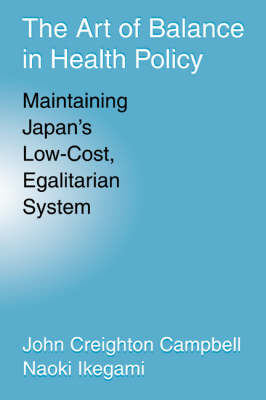
Compared to the rest of the world, Japan has a healthy population but pays relatively little for medical care. This book analyses how the health care works, and how it came into being. Taking a comparative perspective, the authors describe the politics of health care, the variety of providers, the universal health insurance system, and how the fee-schedule constrains costs at both the macro and micro levels. Special attention is paid to issues of quality and to the difficult problems of assuring adequate high-tech medicine and long-term care. Although the authors discuss the drawbacks to Japan's stringent cost-containment policy, they also keep in mind the possible implications for reform in the United States. Egalitarian values and a concern for 'balance' among constituents, the authors argue, are essential for cost containment as well as for access to health care.
Contents:
Preface; 1. Low health care spending in Japan; 2. Actors, arenas, and agendas in health policy making; 3. Health care providers; 4. The egalitarian health insurance system; 5. The macropolicy of cost containment; 6. The micropolicy of cost containment; 7. The quality problem; 8. Lessons?; 9. Notes.
PRODUCT DETAILS
Publisher: Cambridge University Press
Publication date: June, 2008
Pages: 240
Dimensions: 152.00 x 228.00 x 14.00
Weight: 356g
Availability: Available
Subcategories: General Practice