
(To see other currencies, click on price)
MORE ABOUT THIS BOOK
Main description:
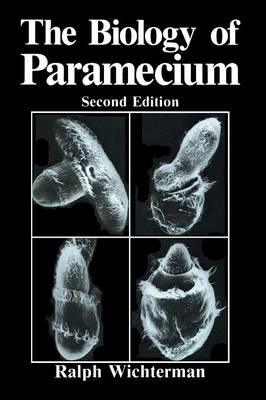
This completely revised, updated, and expanded edition has been neces sitated by the many important newer discoveries that have been made since the publication of the first edition. That volume contained almost 2000 references from the 1600s to 1953. Since then and after an extensive search, I have accumulated some 3800 additional titles from the world's literature on Paramecium. After certain titles that largely represented abstracts and preliminary reports that were followed by full research papers were eliminated, approximately 4400 full titles from the 1600s to the present were selected for inclusion in this edition. Most of the titles in the Bibliography are the more recent ones beginning with 1953. I consider the Bibliography an important part of the book: A good title of a paper in a journal is a minature abstract of its contents. Thus, the reader who may be interested in obtaining additional information not found in the book may refer directly to the original source. A cursory examination of the Bibliography will reveal that parame cium research has extended into all branches of biology, including bio chemistry and biophysics. Like other areas of science, paramecium research has become highly specialized and fragmented. I have attempted to organize and present the basic information in one book. Because of space limitations, some items may have been dealt with briefly. It is in such instances that the Bibliography will be found to be invaluable.
Contents:
1 Classification and Species of Paramecium.- A. Introduction.- B. Taxonomy.- C. Genus Characteristics Emend.- D. "Aurelia" and "Bursaria" Groups.- E. Key to the Common Weil-Defined Species of Paramecium.- F. Problems in the Systematics of Paramecium Species.- G. Descriptions of the Species of Paramecium.- 1. Long-Established Species or Complex of Species of Which Most are Worldwide in Distribution.- "Aurelia" Group.- a. P. aurelia Complex of 15 Sibling Species.- b. P. caudatum.- c. P. multimicronucleatum.- "Bursaria" Group.- d. P. bursaria.- e. P. trichium (= P. putrinum).- f. P. calkinsi.- g. P. polycaryum.- h. P. woodruffi.- 2. More Recently Described Species That are Geographically Limited.- a. P. jenningsi.- b. P. wichtermani.- c. P. africanum.- d. P. pseudotrichium.- e. P. jankowskii.- f. P. ugandae.- 3. Uncertain, Doubtful, or Suppressed Species of Paramecium.- a. P. nephridiatum.- b. P. traunsteineri.- c. P. chilodonides.- d. P. ficarium.- e. P. pseudoputrinum.- f. P. chlorelligerum.- g. P. duboscqui.- h. P. porculus.- i. P. silesiacum.- j. P. articum.- 4. Worldwide Distribution of the Species.- 2 Morphology and Cytology of Paramecium.- A. Introduction.- B. Cortex: Pellicle, Ectoplasm, and Associated Structures.- 1. Silverline System.- 2. Kinetid (Ciliary Corpuscle).- 3. Fibrillar System.- 4. Cilia.- a. Kinetosomes or Basal Bodies.- 5. Vestibulum, Buccal Cavity, and Associated Structures.- a. Vestibulum.- b. Buccal Cavity, Cytostome, and Cytopharynx.- c. Ciliature of the Buccal Cavity.- d. Postoral Fibers.- 6. Trichocysts.- a. Resting, Unextruded Trichocysts.- b. Trichocyst Extrusion.- c. Extruded Trichocysts.- d. Chemical Composition of Trichocysts.- e. Origin and Development of Trichocysts.- f. Function of Trichocysts.- 7. Cytoproct.- 8. Pores of the Contractile Vacuoles.- C. Endoplasm: Organelles and Inclusions.- 1. Organelles.- a. Mitochondria.- b. Peroxisomes (Microbodies, Glycoxysomes).- c. Lysosomes.- d. Endoplasmic Reticulum and Ribosomes.- e. Golgi Apparatus or Dictyosomes.- f. Contractile Vacuoles.- 2. Inclusions.- a. Crystals and Crystalline Granules.- b. Food Vacuoles and Glycogen Granules.- c. Lipid Droplets and Submicroscopic Vesicles.- D. Nuclei.- 1. Macronucleus.- 2. Micronucleus.- 3. Nuclear Variation.- 3 Physical and Chemical Properties of the Protoplasm of Paramecium.- A. Introduction.- B. Permeability and Membranes.- C. Effects of Temperature and Various Agents on Protoplasm of Paramecium.- 1. Effects and Roles of Salts, Acids, Alkalies, Electrolytes, and Other Substances.- 2. Effects of Electric Current, Magnetic Fields, Sound Waves, and Bioelectrical Phenomena.- 3. Effects of Ultraviolet and Visible Light and of Ionizing Radiations: Radioactive Substances and Cosmic Rays.- a. Effects of Ultraviolet Light.- b. Effects of Visible Light.- c. Effects of Ionizing Radiations.- 4. Effects of Drugs and Miscellaneous Substances.- a. Effects of Alcohol.- b. Effects of Narcotics.- c. Photodynamic Action and Sensitization.- d. Effects of Carcinogenic Agents.- e. Effects of Other Inorganic and Organic Agents or Compounds.- D. Effects of Space Flights Aboard Soviet Orbital Station Salyut 6.- 4 The Nutritional Requirements of Paramecium: Axenic Media.- A. Introduction.- B. Essential Neutralities and Axenic Media for Various Species of Paramecium.- 1. P. aurelia Complex.- 2. P. multimicronucleatum.- 3. P. caudatum.- 4. P. trichium.- 5. P. calkinsi.- 6. P. bursaria.- 7. P. jenningsi (and Others).- C. Concluding Remarks.- 5 Nutrition, Growth, and Respiration.- A. Introduction.- B. Ingestion and Food-Vacuole Formation.- C. Secretion, Digestion, and Egestion.- D. Growth and Morphogenesis.- E. Factors That Yield Optimal Growth.- 1. Food.- 2. pH.- 3. Temperature.- 4. Static vs. Motion Cultures.- 5. Light and Darkness.- 6. Oxygen and Aeration.- 7. Waste Products of Metabolism and Overcrowding.- F. Respiration.- 6 Movement, Behavior, and Motor Response.- A. Ciliary Movement and Locomotion.- 1. The Avoiding Reaction and Swimming Behavior.- B. Response to Various Types of Stimuli.- 1. Thigmotaxis.- 2. Geotaxis.- 3. Chemotaxis and Chemokinesis.- 4. Thermotaxis.- 5. Galvanotaxis.- 6. Phototaxis and the Response to Ultraviolet Light and Ionizing Radiations.- 7. Reactions to Combined Stimuli.- C. Behavior of Paramecium and the Question of Learning.- 7 Reproduction, Morphogenesis, Nuclear Processes, and Sexuality.- A. Asexual and Other Similar Processes Involving Nuclear Reorganization.- 1. Binary Fission.- a. Morphogenesis and Growth.- b. Nuclei.- 2. Endomixis.- 3. Hemixis.- 4. Macronuclear Regeneration.- B. Sexual Processes and Related Phenomena.- 1. Conjugation: Modern Concept and Essential Features.- a. Micronuclear Behavior.- b. Macronuclear Behavior.- 2. Conjugation in the Species of Paramecium.- a. P. aurelia Complex of Sibling Species.- b. P. caudatum.- c. P. bursaria.- d. P. multimicronucleatum.- e. P. trichium (= P. putrinum).- f. P. polycaryum.- g. P. calkinsi.- h. P. woodruffi.- i. P. jenningsi.- j. P. wichtermani.- 3. Variations of Normal Conjugation.- 4. Autogamy.- a. Occurrence and Induction of Autogamy.- 5. Cytogamy: Its Relationship to Conjugation and Autogamy.- 8 Genetics: The Mating Reaction, Mating Types, System of Breeding Relationships, and Inheritance in the Species of Paramecium.- A. Introduction.- B. Inheritance in Asexual or Vegetative Reproduction.- 1. Dauermodifikationen.- 2. Inheritance of Cortical Structures.- 3. Inheritance of Mating Type.- C. Mating, Mating Types, and Inheritance in Sexual Reproduction.- 1. P. aurelia Complex of Sibling Species.- a. Inheritance of Mating Type.- b. Cytoplasmic Inheritance.- c. Inheritance in Doublet Paramecia.- d. Mitochondrial Genetics.- 2. P. bursaria.- a. Mating Reaction.- b. Mating Types and the Breeding System.- 3. P. caudatum.- a. Mating Reaction.- b. Mating Types and the Breeding System.- 4. P. multimicronucleatum.- a. Mating Reaction.- b. Mating Types and the Breeding System.- 5. P. trichium (= P. putrinum).- a. Mating Reaction.- b. Mating Types and the Breeding System.- 6. P. calkinsi.- 7. P. polycaryum.- 8. P. woodruffi.- 9. P. jenningsi.- 10. P. wichtermani.- D. Some Aspects of the Mating Phenomenon and Characteristics of the Mating Substance.- E. Regeneration and Morphogenesis.- 9 The Life Cycle, Longevity, and Aging.- A. Background.- B. Isolation Cultures and Clonal Aging.- C. Longevity and Clonal Aging in Regard to Autogamy, Cytogamy, and Conjugation.- 1. Changes Associated with Clonal Aging.- 2. Concluding Remarks on Aging and the Life Cycle.- D. The Question of Cyst Formation in the Life Cycle.- 10 The Antigens of Paramecium.- A. Introduction.- B. Surface Antigens and the Immobilization Reaction.- C. Serological Studies on Speciation and Conjugation.- D. Genetic Analysis: Inheritance of Antigenic Variation and Regulation of Surface-Antigen Expression.- 11 Organisms Living in and upon Paramecium: The Endosymbionts.- A. Paramecia as a Source of Food for Metazoan Animals: Their Role in the Food Chain in Nature.- B. Associations of Paramecium with Other Microorganisms.- 1. Protozoa.- a. Ciliates.- b. Amebas.- c. Flagellates.- 2. Intracellular Bacteria.- a. Bacterial Endosymbionts of the Genus Holospora.- b. Bacterial Endosymbionts of the P. aurelia Complex.- c. Other Bacterial Endosymbionts in Species of Paramecium.- 3. Fungi.- 4. Algae: Endosymbiotic Chlorellae of P. bursaria and Their Interaction with the Host-Mutualism.- 5. Viruses.- C. Evolution of Endosymbionts of Paramecium.- References and Bibliography.
PRODUCT DETAILS
Publisher: Springer (Springer-Verlag New York Inc.)
Publication date: September, 2013
Pages: 599
Weight: 896g
Availability: Available
Subcategories: Microbiology