(To see other currencies, click on price)
MORE ABOUT THIS BOOK
Main description:
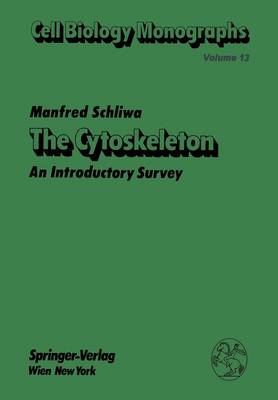
The term cytoskeleton has become firmly established in today's scientific vocabulary. Indeed, it is difficult to believe that only ten years ago, it was virtually non-existent. Since then, the modern field of research on the structural organization of the cytoplasm has turned into one of the most productive and rapidly expanding research areas in Cell Biology today. Considerable progress has been made towards the identification of the various structural components of the cytoskeleton and their interactions with one another and with membranes. The first attempts to understand, in molecular terms, complex cellular processes such as shape changes, locomotion, division, and organelle movements have been made. And it is now apparent that the cytoskeleton has impact on other biological processes such as the control of gene expression, protein synthesis, cell cycle regulation, and development. This monograph outlines the basic properties of the major components of the polymeric filament networks and their interactions and associations. Wherever possible, emphasis is placed on more recent references. Any attempt to cover a research field this complex in an introductory mono graph is, by necessity, fragmentary, and oversights or omissions are inevitable. I wish to apologize in advance to all those colleagues who feel that their work is not adequately represented.
Contents:
Prologue.- A. Components.- I. Cytoplasmic Contractile Proteins.- I.1. Historical Aspects.- I.2. Actin.- I.2.1. Structure.- I.2.2. Actin Assembly in vitro.- I.2.3. Inhibitors.- I.2.3.1. Cytochalasins.- I.2.3.2. Phalloidin.- I.3. Proteins Associated with Cytoplasmic Actin.- I.3.1. Depolymerizing and Polymerization-Inhibiting Proteins.- I.3.2. Cross-Linking Proteins.- I.3.3. End-Binding Proteins.- I.3.4. Some General Considerations on Actin Networks.- I.4. Myosin.- I.4.1. Structure.- I.4.2. Myosin Filament Formation.- I.5. Actin-Myosin Interaction.- I.5.1. Regulation of Actin-Myosin Interaction.- I.5.2. Tropomyosin, Troponin, and Alpha-Actinin in Smooth and Nonmuscle Cells.- I.5.3. Myosin and Its Interaction with Actin: Outlook.- I.6. Aspects of Contractile Protein Distribution and Function.- II. Microtubules.- II. 1. Historical Aspects.- II.2. Microtubule Structure.- II.3. Tubulin.- II.4. Interactions with Other Molecules.- II.4.1. Ions.- II.4.2. Nucleotides.- II.4.3. Microtubule-Associated Proteins.- II.4.4. Drugs.- II.4.4.1. Colchicine and Its Analogues.- II.4.4.2. Vinblastine and Vincristine.- II.4.4.3. Nocodazole.- II.4.4.4. Taxol.- II.4.4.5. Other Microtubule Poisons.- II.5. Mechanism of Microtubule Polymerization.- II.6. Microtubule Polarity.- II.7. Nucleation Sites and Organizing Centers.- II.7.1. Structure.- II.7.2. Demonstration of Nucleating Activity.- II.7.3. Biochemistry of MTOCs.- II.8. Microtubule Machineries: Cilia and Flageila.- II.8.1. Structure.- II.8.2. Function.- II.8.3. Cihary and Cytoplasmic Dyneins.- II.9. Distribution and Function of Microtubules in Cells: A Summary.- III. Intermediate Filaments.- III.1. Historical Aspects.- III.2. Classification of Intermediate Filaments: Molecular Composition and Tissue Distribution.- III.2.1. Vimentin.- III.2.2. Desmin.- III.2.3. Cytokeratins.- III.2.4. Neurofilaments.- III.2.5. Glial Filaments.- III.2.6. Cells Without Intermediate Filaments?.- III.2.7. Intermediate Filaments as Markers For Tumor Characterization.- III.3. Structural, Physical, and Chemical Similarities Between Intermediate Filament Proteins.- III.4. Co-Existence and Co-Assembly of Different Intermediate Filament Subunits.- III.5. Intermediate Filament-Associated Proteins.- III.6. Phosphorylation of Intermediate Filament Proteins.- III.7. Regulation of Intermediate Filament Assembly in the Cell.- III.8. Aspects of the Cellular Distribution and Function of Intermediate Filaments.- IV. Dynamic Aspects of Filament Assembly.- V. Other Filament Types.- V.1. Spasmin-Like Filaments.- V.2. Connectin/Titin-Like Filaments.- V.3. 3nm Linkers.- B. Interactions.- VI. Some General Aspects of the Three-Dimensional Organization of Cytoskeletal Components.- VII. Interactions Between the Major Filamentous Components of the Cytoskeleton.- VII. 1. Some Methods for the Detection of Filament Interactions.- VII.2. Self-Associations of the Major Cytoskeletal Filament Types.- VII.2.1. Actin Filaments.- VII.2.2. Microtubules.- VII.2.3. Intermediate Filaments.- VII.3. Interactions Among Different Filament Components.- VII.3.1 Actin Filaments and Microtubules.- VII.3.2. Actin Filaments and Intermediate Filaments.- VII.3.3. Microtubules and Intermediate Filaments.- VII.4. Filament Interactions: A Perspective.- VIII. The Cytoskeleton and the Cytoplasmic Matrix.- IX. Membrane-Cytoskeleton Interactions.- IX. 1. Introduction.- IX.2. Paradigm Erythrocyte.- IX.2.1. Spectrin.- IX.2.2. Ankyrin.- IX.2.3. Band 3.- IX.2.4. Actin.- IX.2.5. Band 4.1.- IX.2.6. Construction of the Subplasmalermnal Network.- IX.3. Proteins Related to the Erythrocyte Skeleton in Other Cell Types.- IX.4. Association of Membrane Proteins with the Cytoskeleton.- IX.5. Association of Cytoskeletal Fibers with the Membranes.- IX.6. Some Aspects of Organelle-Cytoskeleton Relationships.- IX.7. Specialized Filament-Membrane Assemblies.- IX.7.1. Adherens Junctions and Adhesion Plaques.- IX.7.2. Desmosomes.- IX.7.3. The Brush Border of Intestinal Epithelial Cells.- IX.7.3.1. Morphology and Ultrastructure.- IX.7.3.2. Biochemical Anatomy.- IX.7.3.3. A Note on Brush Border "Motility".- IX.8. Transmembrane Interactions of the Cytoskeleton with the Extracellular Matrix.- References.
PRODUCT DETAILS
Publisher: Springer (Springer Verlag GmbH)
Publication date: January, 2012
Pages: 337
Weight: 595g
Availability: Available
Subcategories: Biochemistry
From the same series