
(To see other currencies, click on price)
MORE ABOUT THIS BOOK
Main description:
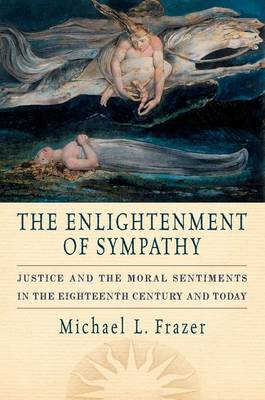
Enlightenment thinkers of the eighteenth century were committed to the ideal of reflective autonomy-the principle that each of us should think for ourselves, particularly when determining moral and political standards. In keeping with that era's reputation as "the age of reason," many interpreted autonomy in a distinctively rationalist way-privileging reflective reason over all other mental faculties.
However, other leading philosophers of the era-such as David Hume, Adam Smith, and J.G. Herder-placed greater emphasis on feeling, seeing moral and political reflection as the proper work of the mind as a whole. They argued that without emotion, imagination, and sympathy we would be incapable of developing the moral sentiments that form the basis of our commitment to justice and virtue.
The Enlightenment of Sympathy reclaims the sentimentalist theory of reflective autonomy as a resource for enriching social science, normative theory, and political practice today. The sentimentalist description of the reflective process is more empirically accurate than the competing rationalist description, and can guide scientists investigating the processes by which the mind formulates moral and political principles.
Yet the theory is much more than merely descriptive, and can also contribute to the philosophical project of finding principles-including principles of justice-that wield genuine normative authority. Enlightenment sentimentalism demonstrates that emotion is necessarily central to our civic life, and shows how our reflective sentiments can counterbalance the unreflective feelings that might otherwise lead our political principles astray.
Contents:
Acknowledgements ; Introduction: A Tale of Two Enlightenments ; Chapter 1: Sentimentalism Before Hume ; I. The New Science of Human Nature ; II. Religious and Metaphysical Foundations ; III. Theories of Justice ; Chapter 2: Hume's Free-Standing Sentimentalism ; I. Sympathy and the Moral Sentiments ; II. Moral Development ; III. Hume's Normative Theory ; Chapter 3: Hume's Conservative Sentimentalism ; I. Hume's Theory of Justice ; II. The Sentimentalist Case Against Hume's Theory ; Chapter 4: Adam Smith's Liberal Sentimentalism ; I. The Alleged Incompatibility of Sentimentalism with Individualism ; II. The Space Between Actor and Spectator: Sympathy and Moral Judgment ; III. The Space Between Actors: Justice and Natural Jurisprudence ; Chapter 5: Kant's Abandonment of Sentimentalism ; I. The Critical-Period Position on the Foundations of Morals ; II. The Critical-Period Normative Evaluation of Sympathy ; III. The Critical-Period Theory of Affects and Passions ; IV. A Contrasting Pre-Critical Position ; Chapter 6: Herder's Pluralist Sentimentalism ; I. Sentimentalism and the Problem of Diversity ; II. From Sympathy to Diversity ; III. From Diversity to Empathetic Understanding ; IV. From Empathetic Understanding to Justice ; Chapter 7: Sentimentalism Today ; I. Sentimentalism and Social Science ; II. Sentimentalism and Normative Theory ; III. Sentimentalism and Political Practice ; Bibliography
PRODUCT DETAILS
Publisher: Oxford University Press (Oxford University Press Inc)
Publication date: September, 2012
Pages: 246
Dimensions: 157.00 x 234.00 x 13.00
Weight: 356g
Availability: Available
Subcategories: Neuroscience