
(To see other currencies, click on price)
MORE ABOUT THIS BOOK
Main description:
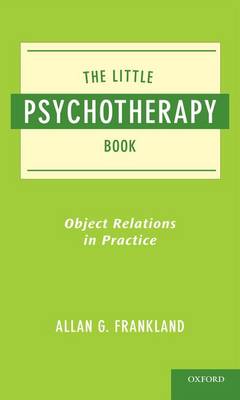
Aimed at beginning therapists and those new to object relations, this concise work introduces the reader to the practice of psychodynamic psychotherapy from an object relations (O-R) perspective in a dynamic and easy-to-follow way. One of the three main schools of psychodynamic psychotherapy, O-R is regarded as particularly challenging, both conceptually and practically. The book presents object relations in a clear and concise manner that makes it especially
applicable for regular use in the clinical setting. Moreover, the author writes in a narrative style similar to actual psychotherapy supervision; dialogues between a therapist and a fictitious patient appear throughout the book to illustrate common clinical situations. Designed to complement actual
training in psychotherapy, the book suggests ways in which the therapist can incorporate object relations tools with other forms of therapy, regardless of the clinical setting. Ideal for students, trainees, and clinicians in psychiatry, psychology, social work, family medicine, and psychiatric nursing, The Little Psychotherapy Book will prove invaluable for any reader seeking a helpful and succinct introduction to object relations in psychotherapy.
Contents:
Acknowledgments
Chapter 1) What Is Object Relations?
Chapter 2) The Big Picture
Chapter 3) Assessment and Formulation
Chapter 4) Patient Selection
Chapter 5) The Treatment Contract
Chapter 6) The Value of Rules and Boundaries
Chapter 7) Beginning the First Session
Chapter 8) The Four Levels of Meaning
Chapter 9) Tools of the Trade
Chapter 10) Projective Identification
Chapter 11) Anxiety and the Paranoid-Schizoid Position
Chapter 12) Silence and Boredom in Therapy
Chapter 13) Neediness in Therapy
Chapter 14) Addressing Possible Decompensation
Chapter 15) Structure and How to Use It Therapeutically
Chapter 16) Verbal Attacks on the Therapist
Chapter 17) Sadness in Therapy
Chapter 18) Erotic Transference and Countertransference
Chapter 19) Advice in Therapy
Chapter 20) Self-Disclosure
Chapter 21) Gifts in Therapy
Chapter 22) Putting It All Together: A Sample Session
Chapter 23) What Is Progress in Therapy?
Chapter 24) Termination and Other Therapy Endings
Chapter 25) Object Relations Concepts and Cognitive Therapies
Chapter 26) Object Relations Concepts in General Follow-Up
References
Glossary
Suggested Reading List
PRODUCT DETAILS
Publisher: Oxford University Press (Oxford University Press Inc)
Publication date: May, 2010
Pages: 200
Dimensions: 129.00 x 176.00 x 16.00
Weight: 199g
Availability: Available
Subcategories: Psychiatry, Psychology, Psychotherapy