(To see other currencies, click on price)
MORE ABOUT THIS BOOK
Main description:
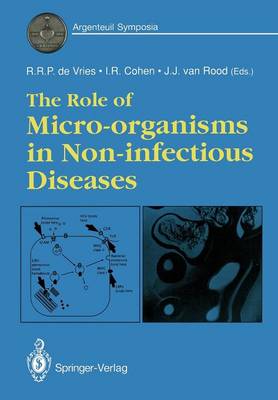
Based on a symposium covering latest research, this volume contains contributions by international experts. They investigate the role that viruses play in certain diseases, and include discussions of animal models and human trials. Some of the chapters cover specifically: streptococci and rheumatic heart disease, Epstein-Barr infection and cancer, and molecular mimicry and autoimmune disease.
Contents:
Introduction: HLA, Plagues and People.- Section I: Autoimmune and Immunopathological Diseases.- 1 Streptococci and Rheumatic Heart Disease.- Antigens of the Streptococcal Cell.- The Cell Membrane.- Muramyl Peptide Peptidoglycans.- Group A Carbohydrate.- Lipoteichoic Acids.- M Protein.- Hyaluronate Capsule.- Rheumatogenic Streptococci.- Rheumatogenic Characteristics.- The Resurgence of ARF in the United States.- Streptococcal Antigens Cross-reactive with Human Tissues.- Autoantibodies and ARF.- Other Antibodies of Special Interest.- Cell-Mediated Immune Responses.- Host Factors.- Summary and Conclusions.- 2 Viruses and Myocarditis.- The Role of Coxsackie Viruses in Heart Disease.- Coxsackie-Induced Myocarditis.- Myosin-Induced Myocarditis in Mice.- Implications for Human Myocarditis.- Summary.- 3 The Role of Environmental Factors in Modulating Insulin Dependent Diabetes.- Insights From Animal Models.- The BioBreeding Rat.- The Non-obese Diabetic Mouse.- Environmental Modulation of Penetrance of Diabetogenic Susceptibility Genes in NOD Mice.- Environmental Factors as Biological Response Modifiers.- Viruses.- Bacterial Products.- Diabetogenic Catalysts in Natural Ingredient Diets.- Isolation of Diabetogenic Catalysts.- Mechanism of Action of Diabetogenic Catalysts.- Summary and Conclusions.- 4 The Role of the Microflora in Graft-versus-Host Disease After Allogeneic Bone Marrow Transplantation.- Microflora and Graft-versus-Host Disease in Mice.- Fetal Gut Implants.- Preclinical Studies in Rhesus Monkeys.- Clinical Bone Marrow Transplantation.- The Underlying Mechanism.- Summary.- Section II: Malignancies.- 5 Human T Lymphotropic Retroviruses: Pathological Consequences of Infection.- Human Retroviruses: Some General Comments.- HTLV-I and T Cell Leukaemias and Lymphomas.- The Mechanisms of HTLV-I Replication and Induction of Leukaemia.- HTLV-I and Neurological Disease.- HIV and the Pathogenesis of AIDS.- Immune Impairment.- Kaposi's Sarcoma.- 6 Viruses, Oncogenes and Cancer.- Cellular Oncogenes and Cancer.- The Role of Ras Oncogenes in Human Neoplasia.- Transformation and Oncogenesis by Human Adenoviruses.- 7 Epstein-Barr Virus Infection and Cancer.- Rationale for an EB Virus Vaccine.- Elaboration and Validation of a Prototype Subunit Vaccine.- Assessment of Vaccines for Use in Man.- A First Generation MA gp340 Vaccine for Human Trials.- Human Trials.- Final Comment.- Section III: Mechanisms and their Implications for Prevention and Therapy.- 8 Chronic Infection, Immunopathology and Immune Suppression.- V-TcR Gene Entry and Exit.- MHC Gene Entry and Exit.- HLA-DQ and H-2E.- 9 What Drives Autoantibodies? The Evidence From Spontaneous Human Autoimmune Diseases.- The Character of the Autoantibodies.- The Nature of the Antigen.- 10 What are the Immunogens That Incite the Autoantibodies of Systemic Lupus Erythematosus?.- Anti-DNA Antibodies.- Autoantibodies Against Ribonuclear Proteins.- Autoantigen-Limiting Idiotypes Stimulate the Production of Autoantibodies.- 11 Inappropriate HLA Molecule Expression in Epithelial Cells: Relevance for Human Autoimmunity.- "Inappropriate" Expression of HLA Class II Molecules in Organ-Specific Autoimmune Diseases.- Can Class II Positive Epithelial/Endocrine Cells Function as Classical Antigen-Presenting Cells?.- Are There Any Lessons From Transgenic Mice?.- How is MHC Molecule Expression in Endocrine Cells Triggered and Regulated?.- Are Cytokines Responsible?.- Is Inappropriate HLA Class II Expression in Endocrine Cells a Primary or a Secondary Event?.- What Role do Cytokines Play in Endocrine Autoimmunity in General?.- Is There a Role for Viruses in Human Endocrine Autoimmunity?.- The Growing Role of Endothelial Cells in Autoimmunity.- Is There a Decisive Role for Cytotoxic Cells?.- Inappropriate Expression of HLA Class II Molecules in Endocrine Cells: Reviving our Model for Autoimmunity.- 12 Molecular Mimicry in Autoimmune Disease.- Molecular Mimicry.- Experimental Models.- Diseases in Man.- Concluding Remarks.- 13 A Heat Shock Protein, Molecular Mimicry and Autoimmunity.- Molecular Mimicry and Autoimmunity.- Adjuvant Arthritis.- A T Cell Strategy.- The 65 kDa Heat Shock Protein.- Where is the Arthritogenic Mimicry?.- Hsp65 is Immunologically Dominant.- Regulation of Anti-hsp65 Cells.- Mimicry in Reverse.- 14 What Do Human T Cells See in the Mycobacterial 65 kDa Heat Shock Protein?.- and Summary.- No Bias Towards or Away From Self-Like Epitopes.- Cross-reactivity With Self May Be Predicted from the Sequence.- HLA Class II Ir Genes and Immunopathology: Lessons from Leprosy.- HLA Class II Ir Genes and Regulation of T Cell Reactivity to the 65 kDa Heat Shock Protein.
PRODUCT DETAILS
Publisher: Springer (Springer London Ltd)
Publication date: December, 2011
Pages: 188
Weight: 368g
Availability: Available
Subcategories: Genetics, Immunology, Microbiology, Oncology
From the same series