
(To see other currencies, click on price)
MORE ABOUT THIS BOOK
Main description:
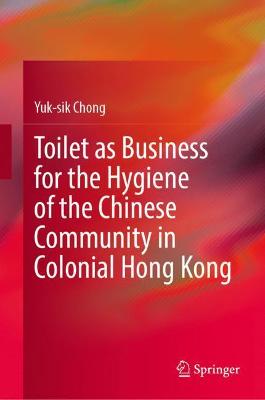
This book analyses how public toilets were provided by the government and local business in Hong Kong between the 1860s and 1930s through a process that was embedded in class and racial politics. Addressing public toilet provision from a political economy perspective, it focuses on the interplay of the cross-border night soil business between Hong Kong and China's silk producing area; the silk market between China and Colonial powers; the Hong Kong land market between the colonial government and Chinese business; and how these factors jointly produced a network of toilets in the colony. As the book shows, the commercial viability of toilets created multiple logics and a new moral geography; further, exploring the topic can help us gain a better understanding of how urban governance functioned in colonies and how it intertwined with economic contingencies within a global economic system. The intended readership includes academics and members of the general public with an interest in colonialism, public infrastructures, public health, government-business relations, and urban governance.
Contents:
Introduction: Capitalism, Morality and the Reordering of Space.- Economic Restructuring and Colonial Collaboration.- Governing Public Health and Colonial Public Toilets.- The Economic Dimension of Governing Public Health: Marketing Public Toilets.- A Blending of Economic and Moral Logics within Public Toilets.- Concluding Remarks: A Particluar Mode of Urban Governance.
PRODUCT DETAILS
Publisher: Springer (Springer Verlag, Singapore)
Publication date: April, 2022
Pages: 115
Weight: 465g
Availability: Available
Subcategories: Public Health