
(To see other currencies, click on price)
MORE ABOUT THIS BOOK
Main description:
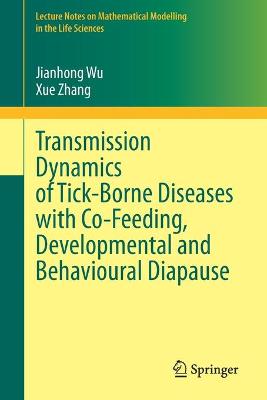
This monograph introduces some current developments in the modelling of the spread of tick-borne diseases. Effective modelling requires the integration of multiple frameworks. Here, particular attention is given to the previously neglected issues of tick developmental and behavioral diapause, tick-borne pathogen co-feeding transmission, and their interactions. An introduction to the required basics of structured population formulations and delay differential equations is given, and topics for future study are suggested. The described techniques will also be useful in the study of other vector-borne diseases.
The ultimate aim of this project is to develop a general qualitative framework leading to tick-borne disease risk predictive tools and a decision support system.
The target audience is mathematical biologists interested in modelling tick population dynamics and tick-borne disease transmission, and developing computational tools for disease prevention and control.
Contents:
1. Ecology, Epidemiology and Global Public Health Burden of Tick-Borne Diseases.- 2. Deterministic Models and Temperature-Driven R0 Maps.- 3. Estimating Infection Risk of Tick-Borne Encephalitis.- 4. Structured Tick Population Dynamics.- 5. Infestation Dynamics and Tick-on-Host Distribution Pattern Formation.- 6. Oscillations Due To Diapause.- 7. Additional Topics for Future Studies.
PRODUCT DETAILS
Publisher: Springer (Springer Nature Switzerland AG)
Publication date: October, 2020
Pages: 170
Weight: 454g
Availability: Available
Subcategories: Public Health