
(To see other currencies, click on price)
MORE ABOUT THIS BOOK
Main description:
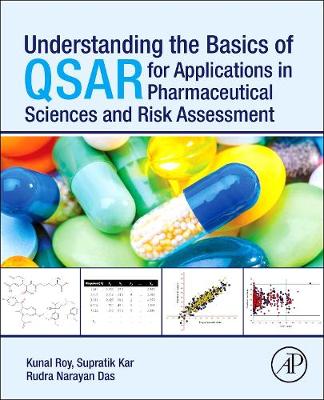
Understanding the Basics of QSAR for Applications in Pharmaceutical Sciences and Risk Assessment describes the historical evolution of quantitative structure-activity relationship (QSAR) approaches and their fundamental principles. This book includes clear, introductory coverage of the statistical methods applied in QSAR and new QSAR techniques, such as HQSAR and G-QSAR. Containing real-world examples that illustrate important methodologies, this book identifies QSAR as a valuable tool for many different applications, including drug discovery, predictive toxicology and risk assessment. Written in a straightforward and engaging manner, this is the ideal resource for all those looking for general and practical knowledge of QSAR methods.
Contents:
Chapter 1: Background of QSAR and Historical developments
Chapter 2: Chemical information and Descriptors
Chapter 3: Classical QSAR
Chapter 4: Topological QSAR
Chapter 5: Computational chemistry
Chapter 6: Selected Statistical methods in QSAR
Chapter 7: Validation of QSAR models
Chapter 8: Introduction to 3D-QSAR
Chapter 9: Newer QSAR techniques
Chapter 10: Other related techniques
Chapter 11: Future avenues
PRODUCT DETAILS
Publisher: Elsevier (Academic Press Inc)
Publication date: March, 2015
Pages: 484
Weight: 1030g
Availability: Available
Subcategories: Pharmacology