
(To see other currencies, click on price)
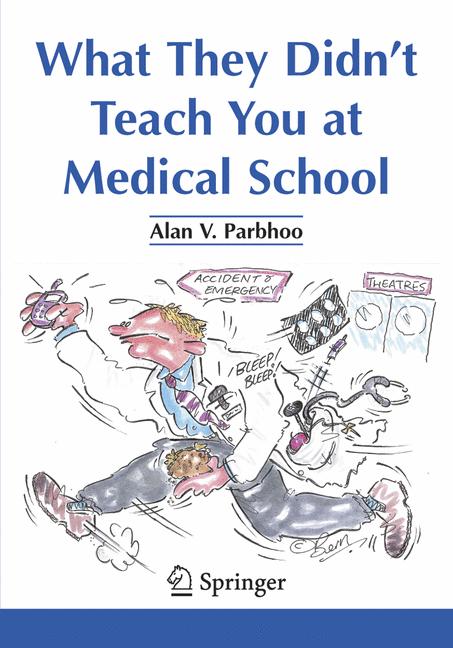
MORE ABOUT THIS BOOK
Main description:
During medical training there are certain tasks that are not taught at medical school nor in the common reference books. There are some skills that medical students are expected to learn by 'osmosis'. These skills are never officially taught or examined in medical school, but are, however, a fundamental part of being a safe, good and efficient doctor. This book includes 'golden rules' or important points to remember and case examples, both of which are given as displayed extracts.
This book will help the junior doctor unlock their potential and improve their performance, cutting the time it takes to achieve certain medical objectives. It is meant to fill in the gaps where the medical school and clinical guides stop. It gives the reader the information needed to organise themselves so that they can hit the ground running. It is not intended as a clinical survival guide, but more a friendly hand to allow the reader to get ahead in medicine and how to keep on track and develop a career path.
Contents:
Introduction
A Brief History of the National Health Service
Modern National Health Service Trusts
Applying for Pre-registration House Officer Posts
Surviving the Pre-registration House Officer Post
The Team
Your Consultant: Keeping Them Happy
Nurses
Radiologists and Radiographers
Therapists and Professionals Allied to Medicine
Referring and Requesting
Clinics
The Operating Theatre
Laboratory Investigations
Getting Registered and Applying for Senior House Officer Posts
Getting on in Your Senior House Officer Post
Postgraduate Examinations: Member of the Royal College of Surgeons/Member of the Royal College of Physicians
Clinical Governance
Audit
A Break from the Norm
Index
PRODUCT DETAILS
Publisher: Springer (Springer London Ltd)
Publication date: July, 2007
Pages: 119
Weight: 454g
Availability: Available
Subcategories: General Issues, General Practice