(To see other currencies, click on price)
MORE ABOUT THIS BOOK
Main description:
A topic–by–topic guide for integrating overseas homelandsecurity practices into those currently used in the UnitedStates
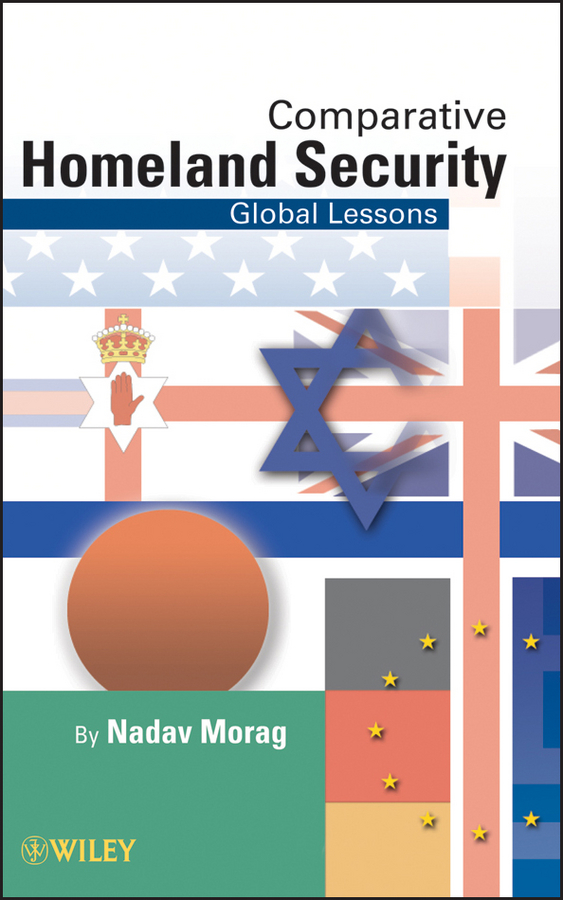
Homeland security practices extend beyond America′s borders.Yet, the United States has failed to look at homeland security (HS)solutions implemented successfully across different corners of theglobe. Comparative Homeland Security raises awareness amongstudents and practitioners with an international menu of HStechniques individual countries have set in place to confront ahost of domestic safety concerns. The book then proceeds to closelyexamine case–by–case examples on why these tactics worked well inan attempt to seek effective alternatives for solving HS problemsfacing the United States. An important weapon for deterringterrorism and responding to crisis situations, Comparative HomelandSecurity:
Covers strategies and tactics to combat terrorism from a numberof the world′s democracies including, but not limited to, GreatBritain, Israel, France, Germany, Canada, Australia, theNetherlands, and Italy
Topics are organized topically rather than by country, whichallows the practitioner to easily compare and potentially integratethe concepts presented into practice
Includes discussion of national strategies, civil libertiesissues, border security and immigration, and emergency response
While there is a marked tendency to view the challenges facingthe United States as unique, many countries have extensive HSpolicies and procedures. Understanding their policy approaches andincorporating some of them to reflect American laws, institutions,and even, in some cases, cultural sensibilities, can significantlyenhance HS policymaking and aid in protecting the safety ofall Americans.
Back cover:
A topic–by–topic guide for integrating overseas homelandsecurity practices into those currently used in the UnitedStates
Homeland security practices extend beyond America′s borders.Yet, the United States has failed to look at homeland security (HS)solutions implemented successfully across different corners of theglobe. Comparative Homeland Security raises awareness amongstudents and practitioners with an international menu of HStechniques individual countries have set in place to confront ahost of domestic safety concerns. The book then proceeds to closelyexamine case–by–case examples on why these tactics worked well inan attempt to seek effective alternatives for solving HS problemsfacing the United States. An important weapon for deterringterrorism and responding to crisis situations, Comparative HomelandSecurity:
Covers strategies and tactics to combat terrorism from a numberof the world′s democracies including, but not limited to, GreatBritain, Israel, France, Germany, Canada, Australia, theNetherlands, and Italy
Topics are organized topically rather than by country, whichallows the practitioner to easily compare and potentially integratethe concepts presented into practice
Includes discussion of national strategies, civil libertiesissues, border security and immigration, and emergency response
While there is a marked tendency to view the challenges facingthe United States as unique, many countries have extensive HSpolicies and procedures. Understanding their policy approaches andincorporating some of them to reflect American laws, institutions,and even, in some cases, cultural sensibilities, can significantlyenhance HS policymaking and aid in protecting the safety ofall Americans.
Contents:
Preface ix
INTRODUCTION: STUDYING INTERNATIONAL HOMELAND SECURITY POLICIES1
1 COUNTRY OVERVIEW 15
2 COUNTERTERRORISM STRATEGIES, LAWS, AND INSTITUTIONS 63
3 LAW ENFORCEMENT INSTITUTIONS AND STRATEGIES 147
4 INTEGRATION AND COUNTER–RADICALIZATION 175
5 THE ROLE OF THE MILITARY IN SECURITY AND SUPPORT FOR CIVILAUTHORITIES 207
6 BORDER SECURITY AND IMMIGRATION POLICIES 239
7 SECURITY POLICIES: CRITICAL INFRASTRUCTURE PROTECTION,PUBLIC PRIVATE PARTNERSHIPS, AND AVIATION, MARITIME, ANDSURFACE–TRANSPORT SECURITY 261
8 EMERGENCY PREPAREDNESS, RESPONSE, AND MANAGEMENT 291
9 PUBLIC HEALTH STRATEGIES AND INSTITUTIONS 335
CONCLUSION: INTERNATIONAL HOMELAND SECURITY 359
References 363
Index 383
PRODUCT DETAILS
Publisher: John Wiley & Sons Ltd (Wiley–Blackwell)
Publication date: November, 2011
Pages: 400
Dimensions: 160.00 x 243.00 x 25.48
Weight: 684g
Availability: Not available (reason unspecified)
Subcategories: Public Health
From the same series