(To see other currencies, click on price)
MORE ABOUT THIS BOOK
Main description:
Provides the latest "–omics" tools to advance the study of food and nutrition
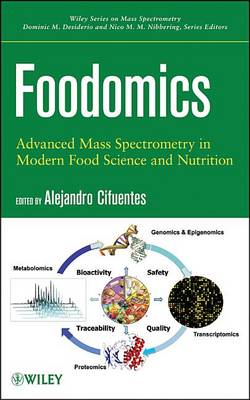
The rapidly emerging field of foodomics examines food and nutrition by applying advanced "–omics" technologies in order to improve people′s health, well–being, and knowledge. Using tools from genomics, transcriptomics, epigenomics, proteomics, and metabolomics, foodomics offers researchers new analytical approaches to solve a myriad of current challenges in food and nutrition science.
This book presents the fundamentals of foodomics, exploring the use of advanced mass spectrometry techniques in food science and nutrition in the post–genomic era. The first chapter of the book offers an overview of foodomics principles and applications. Next, the book covers:
- Modern instruments and methods of proteomics, including the study and characterization of food quality, antioxidant food supplements, and food allergens
- Advanced mass spectrometry–based methods to study transgenic foods and the microbial metabolome
- Mass spectrometry–based metabolomics in nutrition and health research
- Foodomics′ impact on our current understanding of micronutrients (phenolic compounds and folates), optimal nutrition, and personalized nutrition and diet related diseases
- Principles and practices of lipidomics and green foodomics
- Use of chemometrics in mass spectrometry and foodomics
The final chapter of Foodomics explores the potential of systems biology approaches in food and nutrition research. All the chapters conclude with references to the primary literature, enabling readers to explore individual topics in greater depth.
With contributions from a team of leading pioneers in foodomics, this book enables students and professionals in food science and nutrition to take advantage of the latest tools to advance their research and open up new areas of food and nutrition investigation.
Back cover:
Provides the latest "–omics" tools to advance the study of food and nutrition
The rapidly emerging field of foodomics examines food and nutrition by applying advanced "–omics" technologies in order to improve people′s health, well–being, and knowledge. Using tools from genomics, transcriptomics, epigenomics, proteomics, and metabolomics, foodomics offers researchers new analytical approaches to solve a myriad of current challenges in food and nutrition science.
This book presents the fundamentals of foodomics, exploring the use of advanced mass spectrometry techniques in food science and nutrition in the post–genomic era. The first chapter of the book offers an overview of foodomics principles and applications. Next, the book covers:
- Modern instruments and methods of proteomics, including the study and characterization of food quality, antioxidant food supplements, and food allergens
- Advanced mass spectrometry–based methods to study transgenic foods and the microbial metabolome
- Mass spectrometry–based metabolomics in nutrition and health research
- Foodomics′ impact on our current understanding of micronutrients (phenolic compounds and folates), optimal nutrition, and personalized nutrition and diet related diseases
- Principles and practices of lipidomics and green foodomics
- Use of chemometrics in mass spectrometry and foodomics
The final chapter of Foodomics explores the potential of systems biology approaches in food and nutrition research. All the chapters conclude with references to the primary literature, enabling readers to explore individual topics in greater depth.
With contributions from a team of leading pioneers in foodomics, this book enables students and professionals in food science and nutrition to take advantage of the latest tools to advance their research and open up new areas of food and nutrition investigation.
Contents:
Preface xiii
Contributors xv
1 Foodomics: Principles and Applications 1
Alejandro Cifuentes
1.1 Introduction to Foodomics 1
1.2 Foodomics Applications: Challenges, Advantages, and Drawbacks 6
1.3 Foodomics, Systems Biology, and Future Trends 11
Acknowledgments 12
References 12
2 Next Generation Instruments and Methods for Proteomics 15
Marýa del Carmen Mena and Juan Pablo Albar
2.1 Introduction 15
2.2 Emerging Methods in Proteomics 19
2.3 The Move from Shotgun to Targeted Proteomics Approaches 34
2.4 New Instrumental Methods for Proteomics 40
2.5 Bioinformatics Tools 49
References 55
3 Proteomic–Based Techniques for the Characterization of Food Allergens 69
Gianluca Picariello, Gianfranco Mamone, Francesco Addeo, Chiara Nitride, and Pasquale Ferranti
3.1 Introduction: What is Food Allergy? 69
3.2 Food Allergy: Features and Boundaries of the Disease 70
3.3 Immunopathology of Food Allergy and Role of Proteomics 71
3.4 Identification of Food Allergy Epitopes 73
3.5 Expression Proteomics and Functional Proteomics in Food Allergy 81
3.6 Identification of Allergens in Transformed Products 85
3.7 Concluding Remarks 90
References 91
4 Examination of the Efficacy of Antioxidant Food Supplements Using Advanced Proteomics Methods 101
Ashraf G. Madian, Elsa M. Janle, and Fred E. Regnier
4.1 Introduction 101
4.2 Methods for Studying the Efficacy of Antioxidants 102
4.3 Strategies Used for Proteomic Analysis of Carbonylated Proteins and the Impact of Antioxidants 106
4.4 Studying Oxidation Mechanisms 107
4.5 Quantification of Carbonylation Sites 111
4.6 Biomedical Consequence of Protein Oxidation and the Impact of Antioxidants 112
4.7 Redox Proteomics and Testing the Efficacy of Antioxidants 113
References 117
5 Proteomics in Food Science 125
Jose M. Gallardo, Monica Carrera, and Ignacio Ortea
5.1 Proteomics 125
5.2 Applications in Food Science 132
5.3 Species Identification and Geographic Origin 132
5.4 Detection and Identification of Spoilage and Pathogenic Microorganisms 140
5.5 Changes During Food Storage and Processing and Their Relationship to Quality 144
5.6 Proteomics Data Integration to Explore Food Metabolic Pathways and Physiological Activity of Food Components 149
5.7 Nutriproteomics 150
5.8 Final Considerations and Future Trends 151
References 152
6 Proteomics in Nutritional Systems Biology: Defining Health 167
Martin Kussmann and Laurent Fay
6.1 Introduction 167
6.2 From Food Proteins to Nutriproteomics 171
6.3 Nutritional Peptide and Protein Bioactives 172
6.4 Nutritional Peptide and Protein Biomarkers 174
6.5 Ecosystem–Level Understanding of Nutritional Host Health 178
6.6 Conclusions and Perspectives 181
References 182
7 MS–Based Methodologies for Transgenic Foods Development and Characterization 191
Alberto Valdes and Virginia Garcýa–Canas
7.1 Introduction 191
7.2 Controversial Safety Aspects and Legislation on GMOs 192
7.3 Analysis of GMOs: Targeted Procedures and
Profiling Methodologies 193
7.4 Conclusions and Future Outlook 212
Acknowledgments 212
References 212
8 MS–Based Methodologies to Study the Microbial Metabolome 221
Wendy R. Russell and Sylvia H. Duncan
8.1 Introduction 221
8.2 The Gut Microbiota and Their Role in Metabolism 222
8.3 Metagenomics 224
8.4 Metabolomics 225
8.5 Microbial Metabolites in the Human Gut 226
8.6 Analysis of the Microbial Metabolome 229
8.7 Implications for Human Health and Disease 232
8.8 Summary 235
Acknowledgments 235
References 235
9 MS–Based Metabolomics in Nutrition and Health Research 245
Clara Ibanez and Carolina Simó
9.1 Introduction 245
9.2 MS–Based Metabolomics Workflow 246
9.3 Metabolomics in Nutrition–Related Studies 253
9.4 Diet/Nutrition and Disease: Metabolomics Applications 259
9.5 Other Applications in Nutritional Metabolomics 261
9.6 Integration with Other Omics 262
9.7 Concluding Remarks 263
Acknowledgments 264
References 264
10 Shaping the Future of Personalized Nutrition with Metabolomics 271
Max Scherer, Alastair Ross, Sofia Moco, Sebastiano Collino, François–Pierre Martin, Jean–Philippe Godin, Peter Kastenmayer, and Serge Rezzi
10.1 Introduction 271
10.2 Metabolomics Technologies 272
10.3 Personalized Nutrition 278
10.4 Conclusion 291
References 292
11 How Does Foodomics Impact Optimal Nutrition? 303
Anna Arola–Arnal, Josep M. del Bas, Antoni Caimari, Anna Crescenti, Francesc Puiggros, Manuel Suarez, and Lluýs Arola
11.1 Introduction 303
11.2 Nutrigenomics 310
11.3 Nutrigenetics and Personalized Nutrition 323
11.4 The Added Value of Foodomics for the Food Industry 329
11.5 Concluding Remarks 337
References 337
12 Lipidomics 351
Isabel Bondia–Pons and Tuulia Hyotylainen
12.1 Definition and Analytical Challenges in Lipidomics 351
12.2 Lipidomics in Nutrition and Health Research 360
12.3 Lipidomics and Food Science 368
12.4 Future Perspectives 371
References 372
13 Foodomics Study of Micronutrients: The Case of Folates 381
Susan J. Duthie
13.1 Folates in the Diet 381
13.2 Folate and Human Health 383
13.3 Measuring Folates in Human Biomonitoring 385
13.4 Folate and Colon Cancer: Establishing Mechanisms of Genomic Instability Using a Combined Proteomic and Functional Approach 387
13.5 Folate Deficiency and Abnormal DNA Methylation: A Common Mechanism Linking Cancer and Atherosclerosis 394
13.6 Summary 397
Acknowledgments 399
References 399
14 Metabolomics Markers in Acute and Endurance/Resistance Physical Activity: Effect of the Diet 405
Sonia Medina, Debora Villano, Jose Ignacio Gil, Cristina Garcýa–Viguera, Federico Ferreres, and Angel Gil–Izquierdo
14.1 Introduction 405
14.2 Metabolomics Consequences of Physical Activity: Metabolites and Physiological Pathways Affected 407
14.3 Metabolomics and Physical Activity: Effect of the Diet 410
14.4 Concluding Remarks and Future Perspectives 411
Acknowledgments 412
References 412
15 MS–Based Omics Evaluation of Phenolic Compounds as Functional Ingredients 415
Debora Villano, Sonia Medina, Jose Ignacio Gil, Cristina Garcýa–Viguera, Federico Ferreres, Francisco A. Tomas–Barberan, and Angel Gil–Izquierdo
15.1 Introduction 415
15.2 Use of Metabolomics in Nutritional Trials 416
15.3 Statistic Tools in Nutritional Metabolomics 421
15.4 Metabolomics from Clinical Trials after Intake of Polyphenol–Rich Foods 421
15.5 Human Metabolome in Low and Normal Polyphenol Dietary Intake 424
15.6 Concluding Remarks and Future Perspectives 424
Acknowledgments 425
References 425
16 Metabolomics of Diet–Related Diseases 429
Marcela A. Erazo, Antonia Garcýa, Francisco J. Ruperez, and Coral Barbas
16.1 Introduction 429
16.2 Analysis of the Metabolome: Metabolomics 431
16.3 Diet–Related Diseases 432
References 446
17 MS–Based Metabolomics Approaches for Food Safety, Quality, and Traceability 453
Marýa Castro–Puyana, Jose A. Mendiola, Elena Ibanez, and Miguel Herrero
17.1 Introduction 453
17.2 MS–Based Metabolomics for Food Safety 455
17.3 MS–Based Metabolomics to Assess Food Quality 462
17.4 MS–Based Metabolomics Strategies for Food Traceability 464
17.5 Conclusions and Future Outlook 467
Acknowledgments 468
References 468
18 Green Foodomics 471
Jose A. Mendiola, Marýa Castro–Puyana, Miguel Herrero, and Elena Ibanez
18.1 Basic Concepts of Foodomics (and How to Make it Greener) 471
18.2 Basic Concepts of Green Chemistry 472
18.3 Green Processes to Produce Functional Food Ingredients 476
18.4 Development of Green Analytical Processes for Foodomics 482
18.5 Comparative LCA Study of Green Analytical Techniques: Case Study 493
18.6 Conclusion 497
Acknowledgments 498
References 498
19 Chemometrics, Mass Spectrometry, and Foodomics 507
Thomas Skov and Søren B. Engelsen
19.1 Foodomics Studies 507
19.2 XC–MS Data 511
19.3 Data Structures and Models 517
19.4 Conclusion 534
References 535
20 Systems Biology in Food and Nutrition Research 539
Matej Oresic
20.1 Systems Biology New Opportunity for Food and Nutrition Research 539
20.2 Systems Approach to Identify Molecular Networks Behind Health and Disease 542
20.3 Food Metabolome and its Effect on Host Physiology 544
20.4 Building A Systems Biology Platform for Food and Nutrition Research 545
20.5 Future Perspectives 546
References 547
Index 551
PRODUCT DETAILS
Publisher: John Wiley & Sons Ltd (Wiley–Blackwell)
Publication date: April, 2013
Pages: 582
Weight: 958g
Availability: Not available (reason unspecified)
Subcategories: Biochemistry, Diseases and Disorders, Nutrition
From the same series