(To see other currencies, click on price)
MORE ABOUT THIS BOOK
Main description:
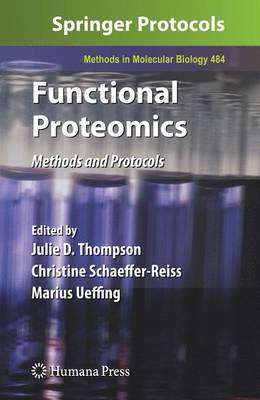
As the emerging field of proteomics continues to expand at an extremely rapid rate, the relative quantification of proteins, targeted by their function, becomes its greatest challenge. Complex analytical strategies have been designed that allow comparative analysis of large proteomes, as well as in depth detection of the core proteome or the interaction network of a given protein of interest. In Functional Proteomics: Methods and Protocols, expert researchers describe the latest protocols being developed to address the problems encountered in high-throughput proteomics projects, with emphasis on the factors governing the technical choices for given applications. The case studies within the volume focus on the following three crucial aspects of the experimental design: 1) the strategy used for the selection, purification and preparation of the sample to be analyzed by mass spectrometry, 2) the type of mass spectrometer used and the type of data to be obtained from it, and 3) the method used for the interpretation of the mass spectrometry data and the search engine used for the identification of the proteins in the different types of sequence data banks available. As a part of the highly successful Methods in Molecular Biology (TM) series, the chapters compile step-by-step, readily reproducible laboratory protocols, lists of the necessary materials and reagents, and tips on troubleshooting and avoiding known pitfalls.
Comprehensive and cutting-edge, Functional Proteomics: Methods and Protocols is an ideal resource for all scientists pursuing this developing field and its multitudinous data.
Contents:
Preface
Contributors
Part I: Introduction
1. A Brief Summary of the Different Types of Mass Spectrometers Used in Proteomics
Christine Schaeffer-Reiss
2. Experimental Setups and Considerations to Study Microbial Interactions
Petter Melin
Part II: Proteomics
3. Plant Proteomics
Eric Sarnighausen and Ralf Reski
4. Methods for Human CD8+ T Lymphocyte Proteome Analysis
Lynne Thadikkaran, Nathalie Rufer, Corinne Benay, David Crettaz, and Jean-Daniel Tissot
5. Label-Free Proteomics of Serum
Natalia Govorukhina, Peter Horvatovich, and Rainer Bischoff
6. Flow Cytometric Analysis of Cell Membrane Microparticles
Monique P. Gelderman and Jan Simak
Part III: Protein Expression Profiling
7. Exosomes
Joost P. J. J. Hegmans, Peter J. Gerber, and Bart N. Lambrecht
8. Toward a Full Characterization of the Human 20S Proteasome Subunits and Their Isoforms by a Combination of Proteomic Approaches
Sandrine Uttenweiler-Joseph, Stephane Claverol, Loik Sylvius, Marie-Pierre Bousquet-Dubouch, Odile Burlet-Schiltz, and Bernard Monsarrat
9. Free-Flow Electrophoresis of the Human Urinary Proteome
Mikkel Nissum and Robert Wildgruber
10. Versatile Screening for Binary Protein-Protein Interactions by Yeast Two-Hybrid Mating
Stef J. F. Letteboer and Ronald Roepman
11. Native Fractionation: Isolation of Native Membrane-Bound Protein Complexes from Porcine Rod Outer Segments Using Isopycnic Density Gradient Centrifugation
Magdalena Swiatek-de Lange, Bernd Muller, and Marius Ueffing
12. Mapping of Signaling Pathways by Functional Interaction Proteomics
Alex von Kriegsheim, Christian Preisinger,and Walter Kolch
13. Selection of Recombinant Antibodies by Eukaryotic Ribosome Display
Mingyue He and Michael J. Taussig
14. Production of Protein Arrays by Cell-Free Systems
Mingyue He and Michael J. Taussig
15. Nondenaturing Mass Spectrometry to Study Noncovalent Protein/Protein and Protein/Ligand Complexes: Technical Aspects and Application to the Determination of Binding Stoichiometries
Sarah Sanglier, Cedric Atmanene, Guillaume Chevreux, and Alain Van Dorsselaer
16. Protein Processing Characterized by a Gel-Free Proteomics Approach
Petra Van Damme, Francis Impens, Joel Vandekerckhove, and Kris Gevaert
17. Identification and Characterization of N-Glycosylated Proteins Using Proteomics
David S. Selby, Martin R. Larsen, Cosima Damiana Calvano, and Ole Norregaard Jensen
Part IV: Protein Analysis
18. Data Standards and Controlled Vocabularies for Proteomics
Lennart Martens, Luisa Montecchi Palazzi, and Henning Hermjakob
19. The PRIDE Proteomics Identifications Database: Data Submission, Query, and Dataset Comparison
Philip Jones and Richard Cote
20. Searching the Protein Interaction Space through the MINT Database
Andreas Zanzoni, Andrew Chatr-aryamontri, Arnaud Ceol, and Gianni Cesareni
21. PepSeeker: Mining Information from Proteomic Data
Jennifer A. Siepen, Julian N. Selley, and Simon J. Hubbard
22. Toward High-Throughput and Reliable Peptide Identification via MS/MS Spectra
Jian Liu
23. MassSorter: Peptide Mass Fingerprinting Data Analysis
Ingvar Eidhammer, Harald Barsnes, and Svein-Ole Mikalsen
24. Database Similarity Searches
Frederic Plewniak
25. Protein Multiple Sequence Alignment
Chuong B. Do and Kazutaka
PRODUCT DETAILS
Publisher: Springer (Humana Press Inc.)
Publication date: December, 2010
Pages: 596
Weight: 1039g
Availability: Available
Subcategories: Biochemistry
Publisher recommends

From the same series